
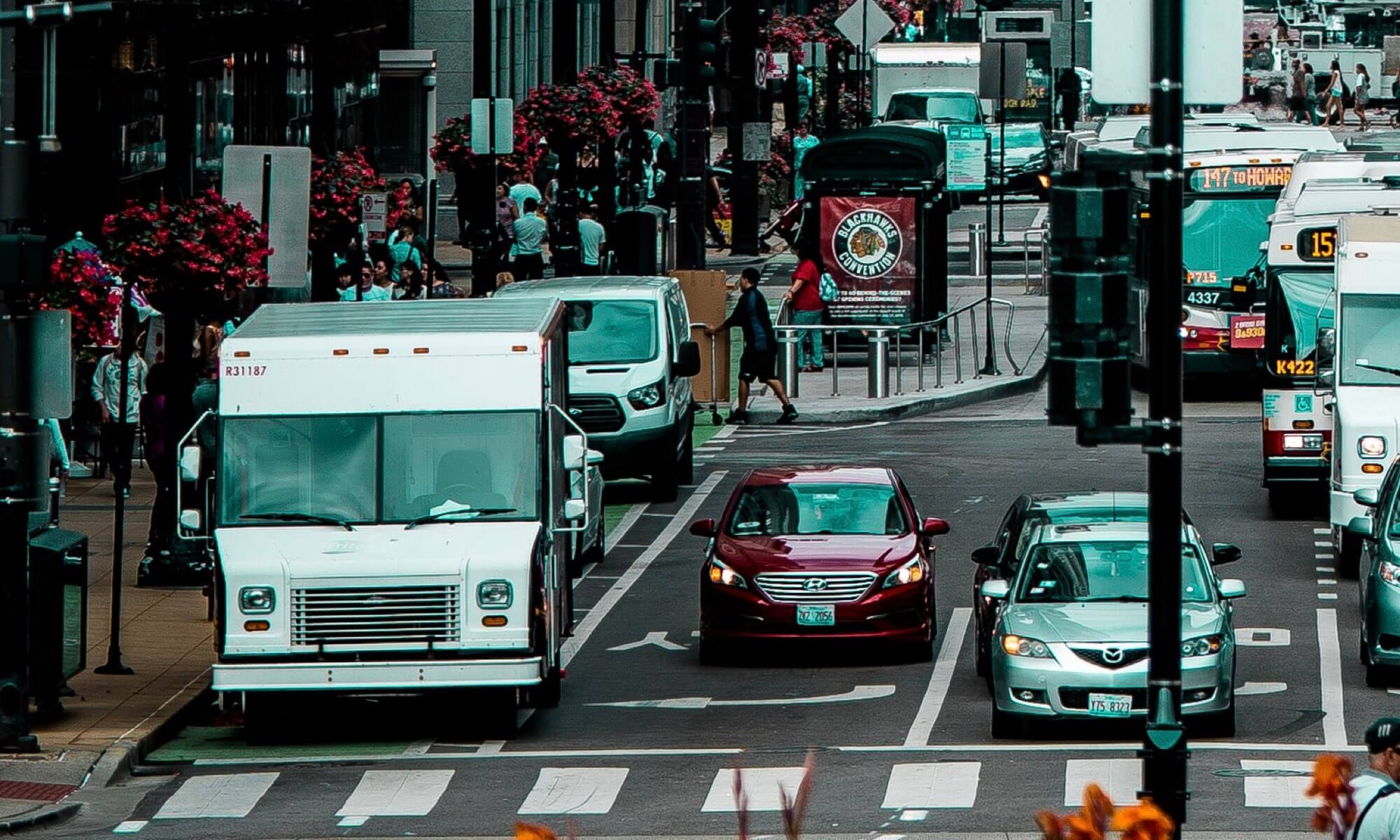


As cities intensify their efforts to cut emissions and improve air quality, transportation continues to be both a major hurdle and opportunity.
While new technologies, including increases in electric and lower emission vehicles often get the spotlight, existing tools can drive immediate impact during the transition. The most underutilized lever for reducing emissions is the one already at our fingertips: data.
From traffic signals to allocation of curb space, data can reveal inefficiencies, guide smarter decisions, and unlock measurable reductions in greenhouse gas and other emissions. Here are some areas where data-driven strategies are already making a difference.
1. Optimize Traffic Signals to Cut Emissions
Poorly timed signals lead to unnecessary idling and fuel consumption. By adding data into this process, cities can implement proactive, emissions-focused optimizations. With clearer visibility into vehicle flow and delay patterns, they can retime intersections to reduce stop-and-go traffic. Using INRIX Signal Analytics, Austin, Texas, found that retiming signals using intersection analytics led to a 20% improvement in total intersection delays and affected 3 million impacted travelers, saving drivers $800,000 in 2024 and significantly reducing emissions.
Signal Analytics utilizes crowdsourced and connected vehicle data to provide insights without requiring costly physical infrastructure or complex system integrations. Unlike traditional traffic management solutions, Signal Analytics delivers actionable intelligence on day one without any additional configuration.
The value of data-driven optimization is further underscored by congeestion impacts nationwide. The INRIX 2025 Global Traffic Scorecard found that in the U.S., delays cost the typical driver more than $894 in lost time. Across the country, this means more than $85 billion was lost to traffic jams. Vehicles stuck in traffic can emit more than 20 pounds of CO₂ per gallon of fuel burned. Cities like Austin and Nashville, TN have used INRIX data to identify congestion hotspots and recurring delays, enabling adaptive signal adjustments and shorten queues, smooth traffic flow, and reduce emissions without costly infrastructure overhauls.
2. Digitize and Manage Curb Space
The “last mile” of travel, especially for deliveries, is a hidden source of emissions, as explained in Cracking the Curb: Helping Cities Solve Last-Mile Deliveries. Delivery vehicles often spend 28% of their time searching for legal loading zones. This inefficiency creates ripple effects across the entire street network. Cities like Portland and San Francisco are using INRIX Curb Analytics to reduce circling and illegal stops, improving air quality and traffic flow. Drivers circling and looking for parking account for roughly 30% of urban traffic congestion.
3. Plan Infrastructure with Emissions in Mind
Before investing in new infrastructure, planners can use data to simulate its impact on emissions. Whether it’s a new bike lane, a zero emissions delivery policy, a bus route, or traffic redesign, data showing the number and type of transportation impacted helps quantify the climate benefits. INRIX data also supports EV infrastructure planning, helping cities understand where and when vehicles charge, and how driving conditions affect energy use.
Conclusion: Data as a Climate Strategy
Reducing transportation emissions doesn’t always require new vehicles or infrastructure—it often starts with better information. When combined, these data-driven improvements form a comprehensive strategy that is both cost-effective and highly scalable. By using data to optimize traffic flow, manage curb space, and guide planning, cities and organizations can make meaningful progress toward net zero.
Learn more about INRIX products here: inrix.com/products/