
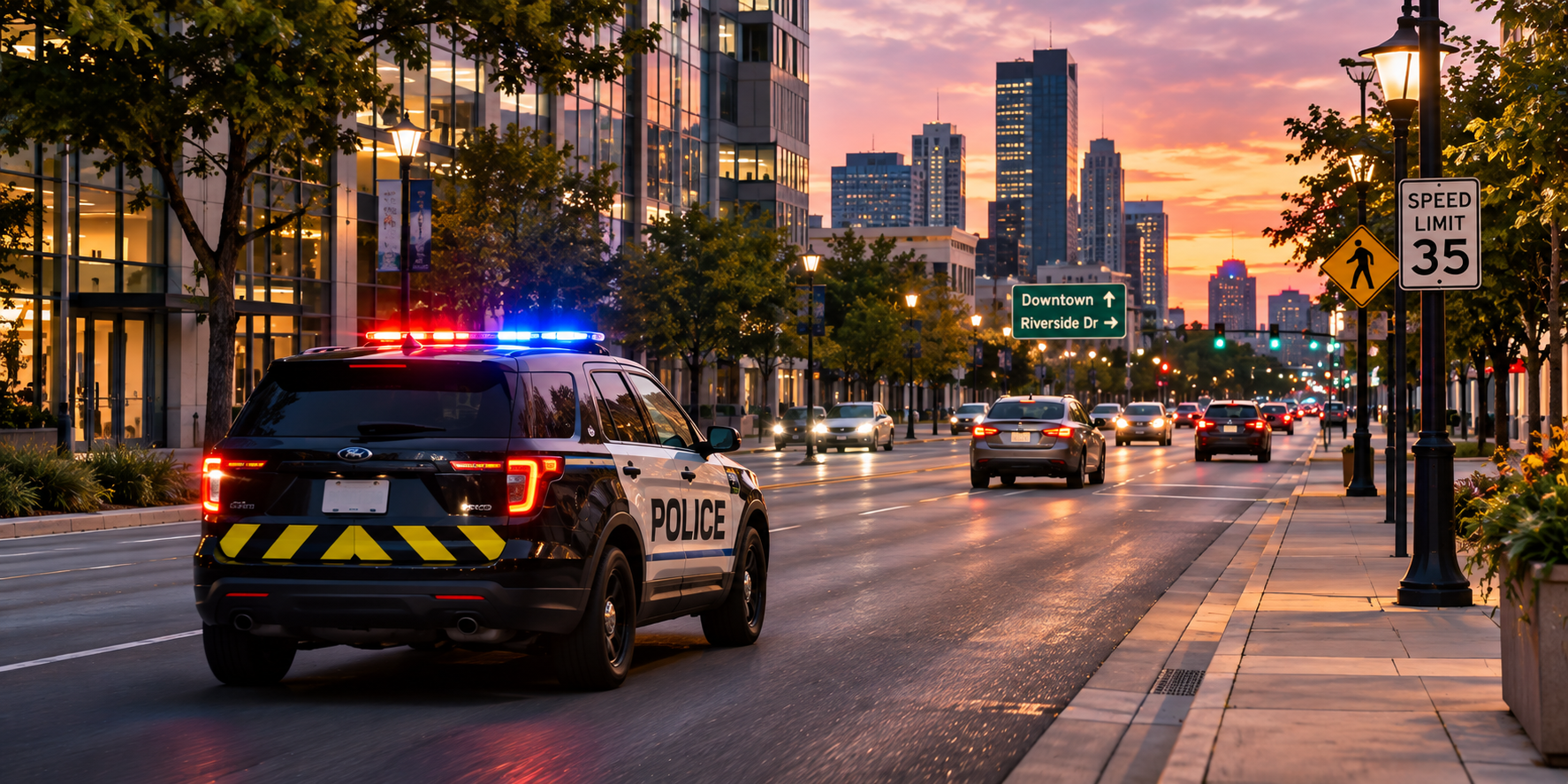


Speeding is a challenge almost every city faces. Whether its drivers moving too fast through residential neighborhoods, school zones, or busy corridors, excessive speeds create serious safety concerns for people walking, driving, and biking.
For police departments, figuring out where to focus enforcement efforts isn’t always easy. Between limited staffing, competing public safety priorities, and a steady stream of resident complaints, determining which roads need the most attention can be difficult.
Many departments rely on citizen complaints, officer observations, and roadside speed studies to identify problem areas. While these approaches are valuable, they don’t always tell the full story of what’s happening across a city’s road network.
That’s where INRIX Speed Distribution Profiles comes in.
Using analysis of historical vehicle speeds, gives police departments a better understanding of where speeding occurs, how frequently it happens, and when drivers are most likely to exceed posted speed limits. These insights can support more effective enforcement strategies and help cities address road safety concerns.
Here are three ways police departments can use Speed Distribution Profiles to support their teams and create safer communities.
- Find Speeding Hotspots Before They Become Bigger Problems
Not every speeding problem comes with a resident complaint. Some roads may experience frequent speeding without anyone reporting it, while others generate multiple complaints even though typical speeds are relatively consistent with posted limits.
Speed Distribution Profiles provides a broader view of driving patterns across roads and corridors, allowing departments to identify potential speeding hotspots throughout their city. By analyzing historical vehicle speeds, departments can answer questions like:
- Which roads experience the most frequent speeding?
- Where are drivers traveling significantly above posted speed limits?
- Are certain streets experiencing consistent speeding problems?
- Which locations should be prioritized for further investigation?
These insights allow departments to look beyond individual complaints and identify areas where speeding may be a larger concern. Rather than waiting for concerns to accumulate, police departments can take a more proactive approach to identifying potential problem areas and prioritizing enforcement efforts.
- See Whether Road Safety Efforts Are Making a Difference
Identifying a speeding problem is one thing. Knowing whether the solution is working is another. When a city installs a speed feedback sign along a residential road or a police department conducts a targeted enforcement initiative, understanding whether driver behavior has changed is an important part of evaluating its effectiveness.
With Speed Distribution Profiles, agencies can compare historical speed patterns across different time periods, depending on data availability. Departments examine speed distributions before and after an initiative to see whether vehicle speeds have changed; speeding has become less frequent, or certain times of day still need attention.
While these comparisons alone can’t prove that a particular initiative caused a change, they provide valuable insight into how driving patterns are evolving. This gives departments another way to assess their efforts, share findings with city leaders, and determine whether additional action may be needed.
- Help Cities Make Smarter Traffic and Infrastructure Decisions
Police departments aren’t the only ones working to address speeding. Traffic engineers, transportation departments, and public works teams all play an important role in making roads safer. When residents request speed bumps, additional signage, or speed feedback signs, these teams often need to work together to determine the best solution.
The challenge is knowing which streets need improvements most. Speed Distribution Profiles and historical data can make these conversations more productive by giving police departments valuable information to share with their city partners.
For example, data may reveal a residential street where drivers consistently exceed posted speed limits. That information can help city teams determine whether the location warrants further evaluation for traffic-calming measures.
It can also highlight corridors where additional signage or targeted enforcement may be worth considering. Instead of relying solely on complaints or observations, departments can bring objective data into the decision-making process. The goal isn’t just to identify speeding. It is to help cities determine how best to address it.
Building Safer Communities with Better Data
For many police departments, the challenge isn’t knowing that speeding exists. It’s determining where to focus limited time, personnel, and resources.
Traditional speed studies often require equipment, staff time, and coordination, making it difficult to investigate every potential problem area. Speed Distribution Profiles, available as an API or through INRIX Mission Control, offers an efficient starting point by providing historical vehicle speed data without requiring roadside equipment at every location for an initial assessment. With greater visibility into speeding patterns, departments can prioritize locations that warrant attention and make better use of available resources.
From validating resident complaints and identifying speeding hotspots to evaluating safety initiatives and supporting traffic-calming decisions, historical speed data gives police departments a clearer picture of where attention is needed. Combined with local knowledge and officer experience, these insights allow departments to prioritize resources, strengthen traffic safety efforts, and create safer roads for their communities.
Learn more about INRIX Speed Distribution Profiles and INIRX Mission Control or contact one of our team members at sales@inrix.com.