
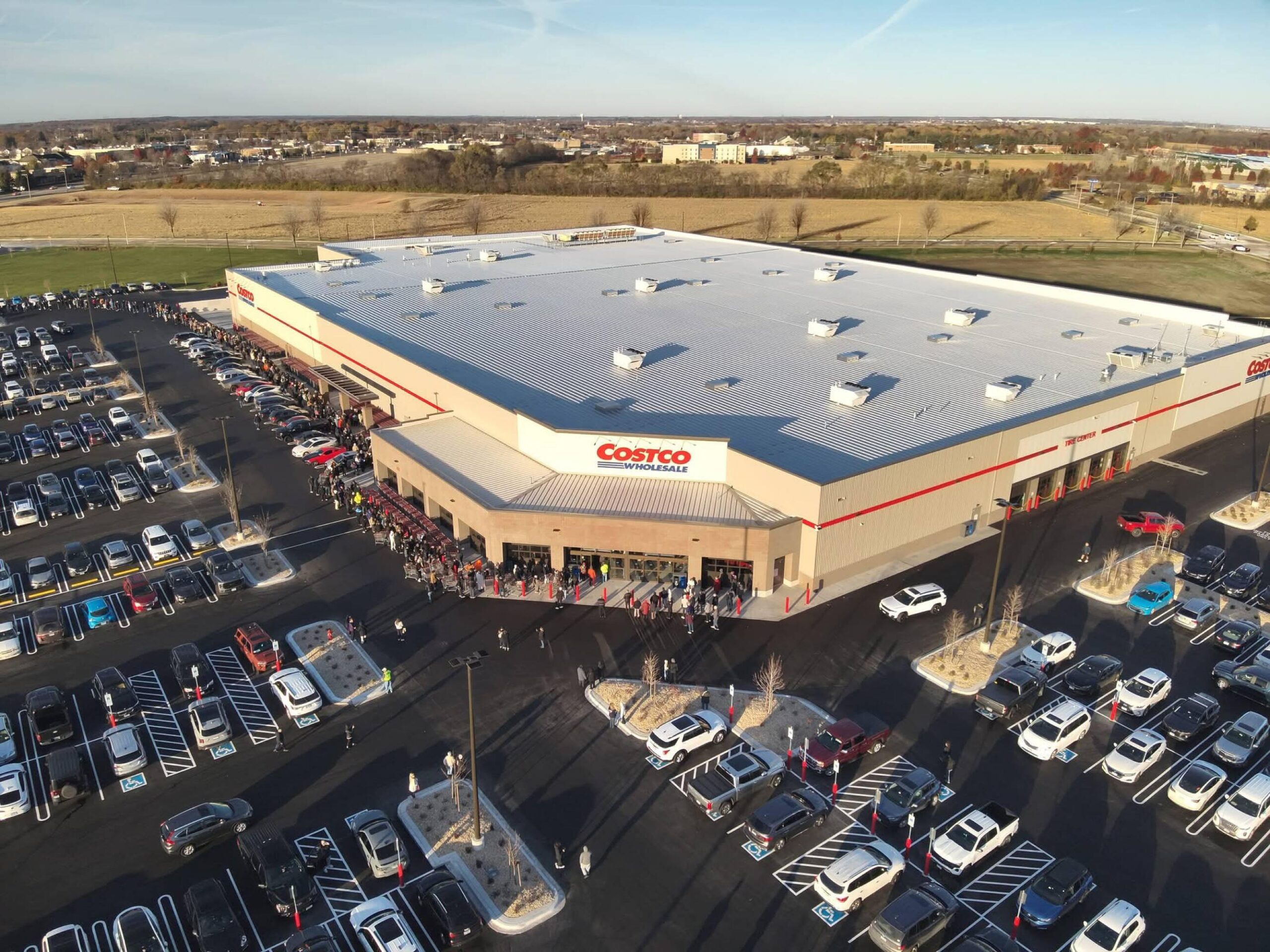


Parking is often one of the highest-correlated factors affecting physical store visits, yet it rarely receives the attention given to demographics, traffic counts, or market potential. The Parking Scorecard helps retailers and quick-service restaurant brands understand parking availability, accessibility, utilization, and competitive conditions across markets. These insights can support smarter site selection decisions, identify barriers to customer visits, and reveal opportunities to improve performance across existing locations.
For consumers, parking is often the first and last touchpoint of the physical shopping experience. If finding a space is difficult, access is inconvenient, pricing is confusing, or parking feels overcrowded, customers may choose another destination altogether.
For retailers and QSRs, parking directly influences store traffic, customer convenience, transaction volume, and revenue potential.
The INRIX Parking Scorecard helps organizations better understand parking conditions across markets, shopping districts, and commercial corridors, providing valuable insights that can support site selection, operational planning, competitive analysis, and investment decisions.
The Hidden Impact of Parking on Customer Behavior
Retail leaders spend significant time understanding why customers visit some locations more frequently than others.
Common factors include:
- Product assortment
- Pricing
- Population density
- Local demographics
- Competitive presence
- Marketing effectiveness
But accessibility often plays an equally important role.
Customers increasingly value convenience. A great location isn’t simply where customers live or work. It’s a location that’s easy to access, easy to navigate, and easy to park.
When parking becomes difficult, consumers often respond by:
- Reducing visit frequency
- Shortening shopping trips
- Choosing alternative locations
- Delaying purchases
- Shifting spending online
- Visiting competitors with easier access
Understanding parking performance can help retailers and QSR operators better understand these customer behaviors and identify opportunities for improvement.
Better Site Selection Starts with Better Accessibility Data
Retailers routinely invest millions of dollars selecting and developing new locations.
Traditional site selection often evaluates:
- Traffic volumes
- Demographics
- Trade areas
- Household income
- Competitive locations
- Population growth
However, two sites with nearly identical demographic characteristics can perform quite differently if parking conditions vary significantly.
The Parking Scorecard provides visibility into factors such as:
- Parking availability
- Parking utilization
- Accessibility trends
- Parking demand patterns
- Relative parking performance across markets
This information can help retailers answer critical questions before making major location investments:
- Is parking sufficient to meet anticipated demand?
- Will customers experience parking challenges during peak periods?
- How does parking compare to competing retail centers?
- Are parking conditions improving or becoming constrained?
The ability to incorporate parking intelligence into site evaluation adds another layer of confidence to location decision-making.
Competitive Benchmarking Beyond Store Count and Market Share
Every retailer wants to understand why one shopping district outperforms another.
Parking data can provide valuable clues.
For example, two retail corridors may appear equally attractive based on demographics and traffic counts. Yet one may consistently outperform because parking is easier, more abundant, or more convenient.
The Parking Scorecard can help organizations evaluate:
- Which shopping districts are easiest to access
- Which commercial areas experience the highest parking demand
- Whether parking conditions are improving or worsening
- How specific markets compare to regional competitors
These insights can help retailers understand whether accessibility advantages may be contributing to customer visitation patterns.
In some cases, parking performance may reveal competitive advantages that traditional market research overlooks.
Why Parking Matters Even More for Quick-Service Restaurants
For QSRs, convenience is often the product.
Customers choosing a quick-service restaurant are frequently making decisions based on speed, accessibility, and ease of transaction.
“How often do people comment, ‘I love their food but it’s so hard to park around there!’” When parking becomes difficult, it deters patrons from visiting a store.
Parking challenges can affect:
- Lunch-hour traffic
- Dinner rush performance
- Mobile order pickup activity
- Takeout volume
- Customer satisfaction
- Repeat visitation
A restaurant may have strong brand recognition, competitive pricing, and excellent food quality, yet still experience lower customer volumes because customers find nearby competitors easier to access.
Understanding parking conditions can help operators identify operational barriers that may be impacting store performance.
Improving Store Operations Through Parking Insights
Parking isn’t just a site selection issue.
It affects day-to-day operations as well.
Retail and restaurant operators frequently analyze performance metrics such as:
- Conversion rates
- Visit frequency
- Average transaction value
- Customer satisfaction scores
- Revenue per location
What is often less visible is how parking influences each of these metrics.
A customer who struggles to find parking may spend less time shopping. They may visit less frequently. They may avoid peak periods altogether.
In contrast, locations with efficient customer access often benefit from:
- Stronger repeat visitation
- Higher customer satisfaction
- Greater convenience perception
- More consistent traffic patterns
The Parking Scorecard helps organizations identify markets where accessibility conditions may be helping or hurting location performance.
Identifying Underperforming Locations
One of the most valuable applications of parking intelligence is identifying potential root causes behind store underperformance.
Imagine a retailer operating 100 locations.
Sales analysis reveals that 20 stores consistently underperform against expectations despite favorable demographics, competitive pricing, and similar merchandising strategies.
Parking data may reveal a common pattern:
- Lower parking availability
- Higher parking utilization
- Greater congestion
- Reduced accessibility during peak periods
These insights can help retailers focus attention on factors outside the store itself that may be influencing customer behavior.
Rather than assuming marketing, inventory, or pricing issues are solely responsible, operators can gain a more complete picture of the customer experience.
A Realistic Example of the Business Impact
Consider a retailer with 100 stores averaging $10 million in annual revenue.
Analysis identifies 20 locations where parking availability is significantly worse than comparable stores.
If improvements in accessibility, customer convenience, or parking-related decision-making increase visitation by just 2%, the financial impact can be substantial.
For a single store generating $10 million annually:
- 2% increase in sales = $200,000 additional revenue
Across 20 stores:
- $4 million in incremental annual revenue
While real-world outcomes vary, this example illustrates why parking is increasingly viewed as a business performance factor rather than merely a facility issue.
Small improvements in customer accessibility can generate meaningful financial returns at scale.
Understanding Market Trends Before Competitors Do
Parking conditions are not static.
Population growth, mixed-use development, changing commute patterns, and evolving consumer behavior can all influence parking demand.
Retailers and QSR operators that monitor these trends gain valuable insight into how markets are changing over time.
The Parking Scorecard helps organizations explore:
- Emerging parking constraints
- Shifts in demand patterns
- Regional comparisons
- Developing market trends
- Changes in accessibility over time
These insights can support both near-term operational decisions and long-term growth planning.
Turning Parking into a Strategic Advantage
The most successful retailers and QSR brands continually look for ways to remove friction from the customer journey.
Parking often represents one of the largest and most overlooked sources of friction.
A customer’s experience begins long before they make a purchase. It starts when they decide where to go and whether getting there will be easy.
The Parking Scorecard offers a unique opportunity to better understand how parking conditions influence accessibility, customer behavior, and location performance across markets.
Whether you’re evaluating new sites, benchmarking competitors, investigating underperforming locations, or looking for ways to improve customer convenience, the scorecard provides valuable insights into a critical component of the physical customer experience.
Explore the INRIX Parking Scorecard to see how parking conditions vary across retail markets, shopping districts, and commercial corridors. You may discover that one of the strongest predictors of store performance isn’t inside the store at all. It’s in the parking lot.