


“Why are deliveries late even when capacity and rates look stable?”
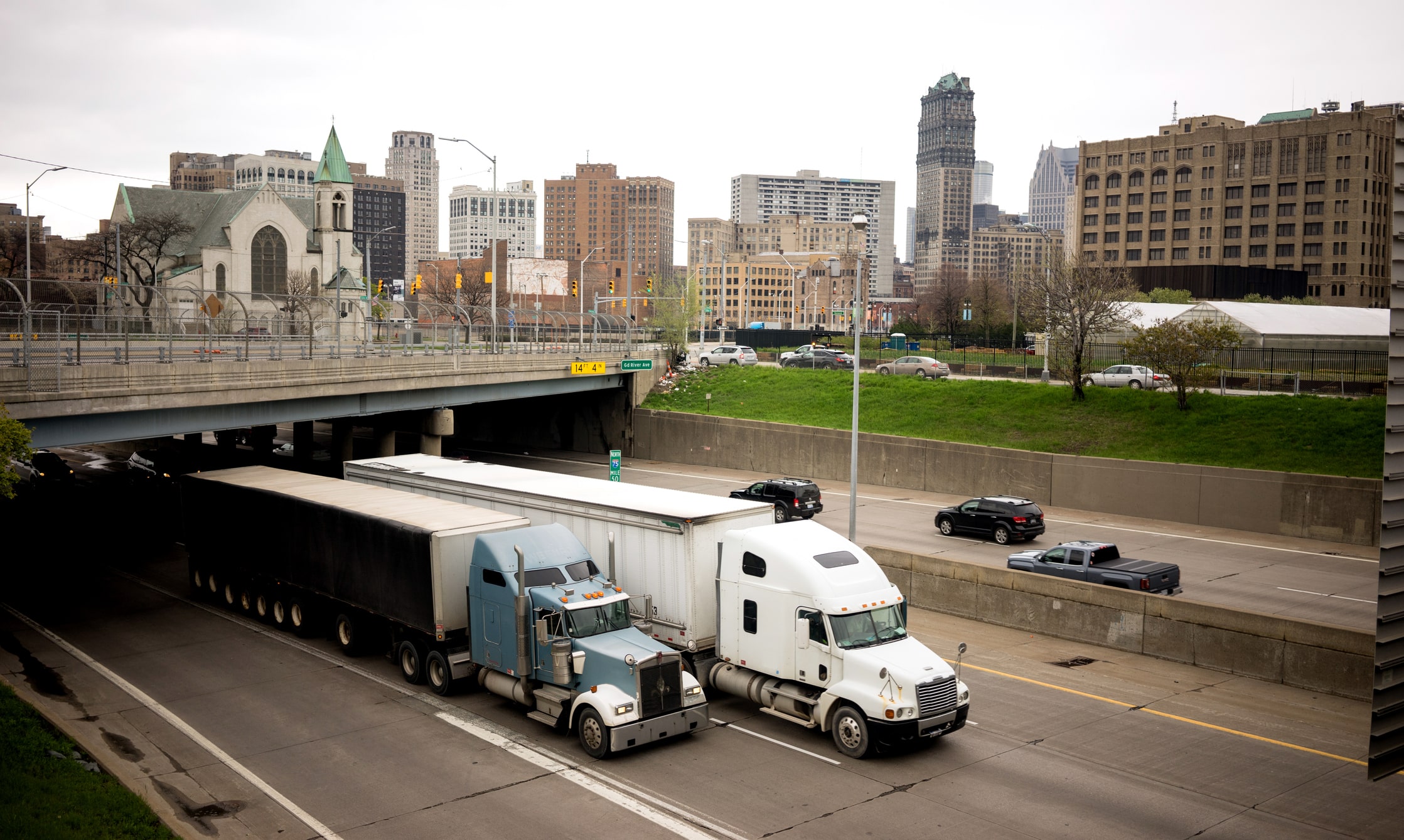
This is one of the most common questions shippers, carriers, and third‑party logistics providers ask today. Even when freight pricing stabilizes and capacity appears available, service reliability continues to deteriorate. Missed appointments, cascading delays, and driver schedule compression are no longer edge cases, they are operational norms. The root cause is not always volume. Increasingly, roadway congestion, travel-time reliability, and last‑mile delivery variability are the factors that determine whether freight moves as planned.
What Are Big Transportation Challenges for Shippers, Carriers, and 3PLs in 2026?
Most freight operators face a similar set of challenges:
- Unpredictable congestion, especially in urban and suburban corridors
- Inconsistent travel times that invalidate static route plans
- Last‑mile delivery delays caused by curb access, dwell time, and local bottlenecks
- Compressed delivery windows that reduce tolerance for variability
- Driver hours-of-service constraints amplified by small but frequent delays
These issues compound across the network. A 15‑minute delay early in the day can trigger missed dock appointments, overtime costs, or forced rest periods later on.
Why Congestion Is a Reliability Problem, Not Just a Speed Problem
Many planning models treat congestion as a simple slowdown. In reality, congestion creates variability, not just lost minutes. Key questions freight planners are asking include:
- Which routes are unreliable at specific times of day?
- When does a corridor shift from predictable to volatile?
- How often do actual travel times exceed planned schedules?
Understanding travel‑time reliability—not just average speed—has become essential. Two lanes with the same average transit time can have very different delivery risk profiles.
Why Last-Mile Delivery Creates Disproportionate Disruption
The last mile is where uncertainty concentrates. Common last‑mile challenges include:
- Inconsistent curb access and loading zones
- Local congestion not visible in regional planning tools
- Variable dwell times at customer locations
- Conflicts with pedestrians, transit, and local traffic rules
Because last‑mile deliveries occur at the end of a route, there is little opportunity to recover once delays appear. This makes last‑mile performance a leading driver of missed service commitments.
How Data and Analytics Help Freight Operators Improve Reliability
Freight organizations are increasingly using transportation analytics to understand how the road network behaves. Instead of asking, “What is the fastest route?”, they are asking:
- What is the most reliable route by time of day?
- Where does travel-time variability consistently spike?
- How much buffer is necessary—and where is it wasteful?
By analyzing observed travel behavior across corridors and delivery zones, teams can:
- Adjust departure times to avoid high‑risk periods
- Engineer schedules around reliability, not assumptions
- Reduce unnecessary buffer without increasing risk
- Improve driver planning and hours-of-service compliance
Turn Traffic and Delivery Data into Decisions
Effective analytics focus on decision support, not real‑time micromanagement. The highest-value insights help answer:
- When deliveries are most likely to run late
- Which routes introduce hidden schedule risk
- Where small delays cascade into larger failures
This allows freight operators to design routes and delivery windows that reflect real-world conditions, not idealized ones.
Why Freight Leaders Are Reframing the Problem
Congestion and last‑mile delays are no longer anomalies. They are structural features of modern transportation networks. Organizations that succeed are not those that try to eliminate variability, but those that measure it, plan for it, and manage it intentionally. Data does not remove uncertainty—but it turns uncertainty into something predictable, explainable, and actionable.