


For more than 50 years, local traffic reporting has been closely tied to broadcast television and radio. Morning commuters turned on the news before leaving home. Drivers listened to traffic updates every ten minutes on the radio. Helicopters circled major metropolitan areas reporting congestion and incidents. But media consumption has changed dramatically.
Consumers increasingly receive news from streaming platforms, connected TVs, podcasts, social media feeds, mobile apps, and digital audio services. Many households no longer watch local television news, and younger audiences may never tune into traditional broadcasts at all.
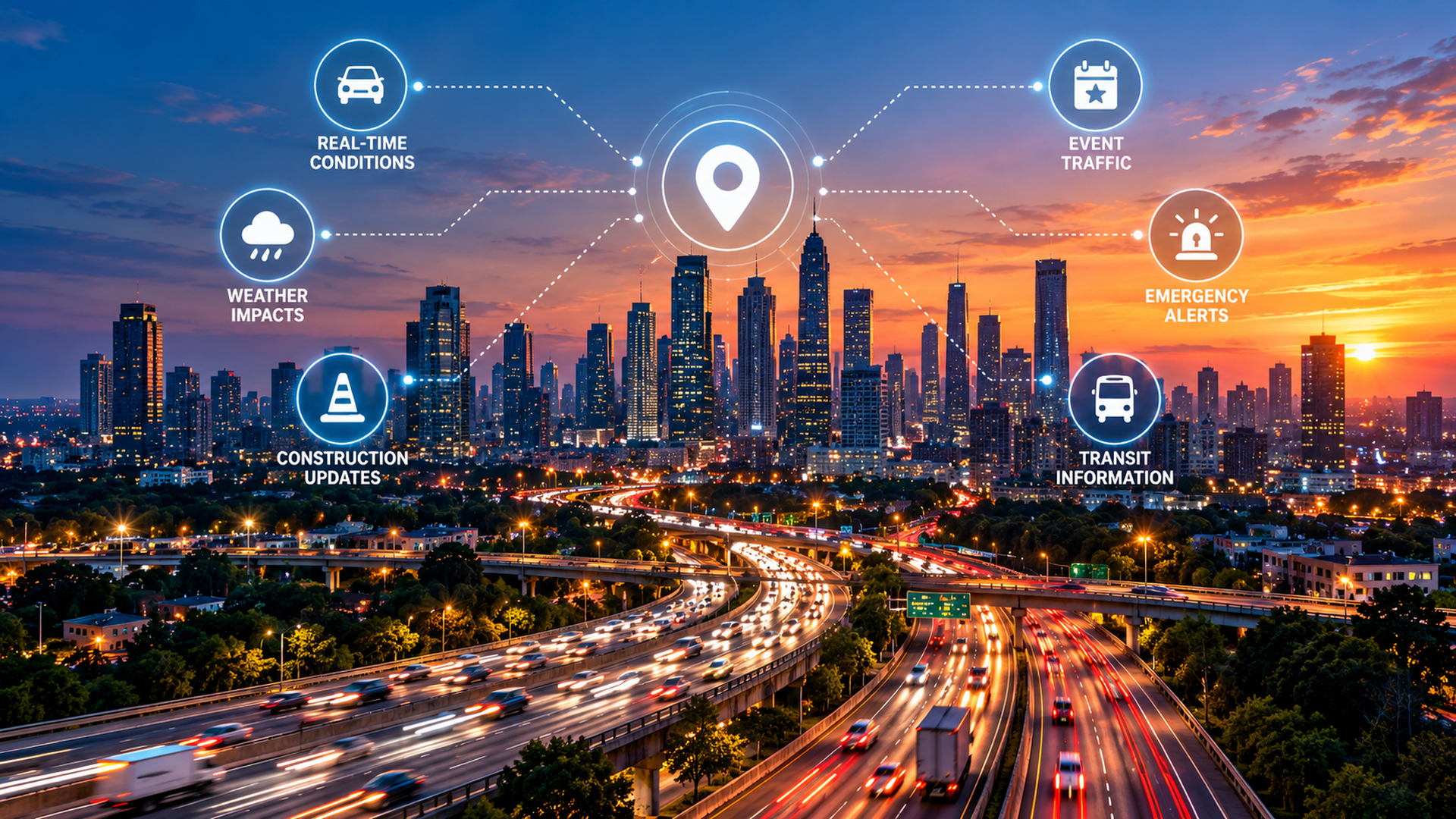
At the same time, the need for local traffic information has not disappeared. In many ways, it has become more important. Roadway conditions, weather impacts, crashes, construction, special events, transit disruptions, and emergency situations continue to affect millions of daily trips. The challenge for media organizations is no longer gathering traffic information. The challenge is delivering local traffic information where audiences are already consuming content. Streaming and digital media may represent the next evolution of traffic reporting.
Why Local Traffic Information Still Matters
Despite major changes in media consumption, transportation remains one of the most universal forms of local information. People may not care about every local news story every day. They do care about:
- Whether a crash will delay their commute
- Whether severe weather will impact travel
- Which routes are closed
- Whether an event will create congestion
- How long it will take to reach work, school, or home
- Whether evacuation routes remain accessible during emergencies
Local traffic information remains highly actionable. Unlike many forms of content, it influences decisions immediately. That makes it particularly valuable for digital and streaming platforms seeking to increase engagement and provide everyday utility to audiences.
The Audience Has Already Moved
Media Consumption Is Increasingly Digital
The traditional traffic report was designed for a world dominated by scheduled broadcasts. Morning news aired at 5:00 AM. Traffic updates occurred every ten minutes. Evening newscasts provided commuter information at fixed times. Today’s audiences operate differently. Consumers increasingly receive information through:
- Streaming TV platforms
- FAST channels (Free Ad Supported Television)
- Mobile news apps
- Podcasts
- Smart speakers
- Connected vehicles
- Social media feeds
- Digital audio platforms
- AI-powered assistants
Information is now consumed on demand. Traffic content must evolve accordingly. The future of traffic reporting is not simply creating better traffic reports. The future is making traffic intelligence available whenever and wherever users need it.
Why Streaming Platforms Are Well Positioned
Traffic Information Naturally Fits Local Streaming Content
One of the biggest opportunities in streaming media is localization. National platforms increasingly seek ways to make content more relevant to individual viewers. Traffic information is inherently local. A viewer in Seattle needs different information than a viewer in Dallas. A commuter traveling across Atlanta faces different conditions than a traveler heading to an airport in Chicago.
Streaming platforms can use location-aware content delivery to provide traffic information that is relevant to individual users. Rather than broadcasting a single segment to an entire market, streaming services can deliver personalized traffic updates based on geography, travel behavior, and current conditions. This represents a significant shift from traditional one-to-many broadcasting.
Traffic as Always-On Content
Traffic Doesn’t Need to Be a Segment
Historically, traffic information was packaged as a recurring news segment. In digital environments, it does not need to work that way. Traffic information can become an always-available utility. Examples include:
On-Demand Traffic Briefings
Viewers could request:
- Current commute conditions
- Airport traffic updates
- Regional congestion reports
- Special event impacts
- Weather-related disruptions
Personalized Route Updates
Users could receive information specific to:
- Home-to-work routes
- School commutes
- Frequent destinations
- Logistics corridors
- Regional travel patterns
Hyperlocal Neighborhood Coverage
Instead of covering an entire metropolitan area, traffic reports could focus on:
- Individual counties
- Neighborhoods
- Specific corridors
- Local construction impacts
- Event-related traffic
Digital platforms enable a level of personalization traditional broadcast workflows could never support.
How AI Changes Traffic Reporting
From Static Reports to Dynamic Storytelling
Artificial intelligence is transforming how content is created and delivered. Traffic reporting is no exception. Historically, traffic reports required:
- Human script writing
- On-air talent
- Production workflows
- Fixed broadcast schedules
AI makes it possible to transform transportation data into dynamic updates that can be created automatically. This creates opportunities for:
- Text-based traffic articles
- Streaming news updates
- Digital audio briefings
- Social media reports
- Localized video segments
- Smart speaker experiences
Rather than producing a small number of reports each day, media organizations can continuously generate relevant traffic content as conditions change. The result is timelier and more personalized information.
Traffic Information Beyond Daily Commuting
The Most Valuable Traffic Stories Are Often Not About Traffic
One of the biggest misconceptions about transportation reporting is that it only serves commuters. Transportation data often reveals much larger stories. Traffic intelligence can provide insight into:
Weather Events: How storms, flooding, snow, wildfire smoke, or hurricanes affect mobility.
Public Safety: Road closures, emergency response activity, evacuation routes, and incident impacts.
Economic Activity: Freight movement, tourism activity, retail visitation, and regional growth.
Major Events: Sporting events, concerts, conventions, and festivals.
Infrastructure Changes: Construction projects, bridge closures, transit expansions, and roadway investments.
Transportation intelligence increasingly serves as a lens for understanding broader community activity.
Why Digital Media Needs Transportation Intelligence
Engagement Starts with Relevance
One of the biggest challenges facing local media organizations is maintaining relevance in a fragmented media landscape. Audiences increasingly expect information that is:
- Personalized
- Actionable
- Local
- Real-time
- Mobile-friendly
Traffic information naturally meets all these requirements. When delivered effectively, transportation intelligence can help digital publishers create recurring engagement because travel conditions affect audience members every day. Unlike many news stories, transportation impacts are not occasional. They are continuous. That creates opportunities for stronger audience relationships and increased daily usage.
New Opportunities for Streaming, Podcasts, and Digital Audio
The Rise of Spoken Traffic Intelligence
The growth of podcasts, smart speakers, and digital audio presents another opportunity. Audio remains one of the most effective formats for transportation information because people often consume it while traveling. Future experiences may include:
Location-Aware Audio Briefings – “Here’s what you need to know about traffic conditions in Bellevue this morning.”
Event-Specific Travel Reports –“What fans attending tonight’s game should expect.”
Airport and Travel Updates – “Current travel conditions around Sea-Tac Airport.”
Emergency Information – “Evacuation routes and travel impacts following severe weather.”
As streaming audio continues to expand, transportation information becomes an increasingly valuable content category.
Frequently Asked Questions
Why is local traffic information still important?
Local traffic information helps people make immediate travel decisions, avoid delays, prepare for weather impacts, respond to emergencies, and navigate roadway disruptions.
How can streaming platforms deliver traffic information?
Streaming platforms can provide location-aware traffic reports, personalized commute updates, hyperlocal transportation coverage, on-demand briefings, and AI-generated traffic content.
Why are broadcasters investing in digital traffic experiences?
Audiences increasingly consume content through streaming services, connected devices, apps, and digital media rather than traditional broadcasts. Traffic reporting must evolve to meet audiences where they are.
Can AI generate traffic reports?
Yes. AI can transform transportation intelligence into articles, videos, audio briefings, social posts, and streaming content, helping media organizations deliver faster and more personalized updates.
What types of digital media can distribute traffic information?
Streaming TV, FAST channels, podcasts, smart speakers, connected vehicles, mobile apps, websites, digital audio platforms, and social media channels can all deliver traffic content.
The Future of Traffic Reporting Is Wherever Audiences Are
The need for local traffic information has not declined. The way people consume it has changed. As audiences move toward streaming platforms, digital audio, connected vehicles, mobile experiences, and AI-powered assistants, transportation information must evolve alongside them. The next generation of traffic reporting will not be defined by helicopters and broadcast schedules. It will be defined by personalization, automation, localization, and real-time delivery. The organizations that succeed will recognize a simple reality:
People may not turn on the evening news anymore. But they still want to know whether they can get home on time. And increasingly, streaming and digital media will be where they find that answer.