
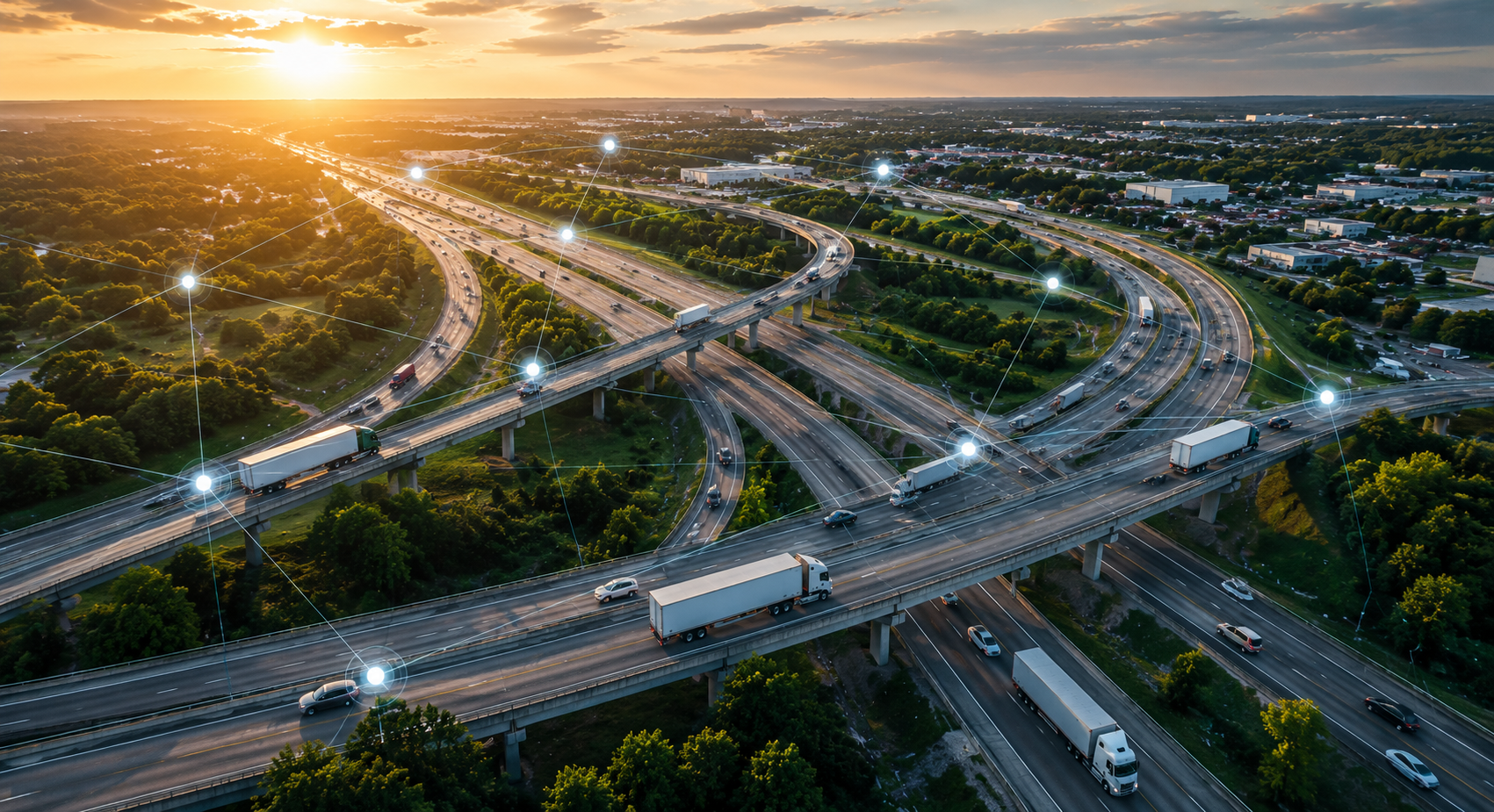


Supply chain resilience is the ability to anticipate, adapt to, and recover from disruptions while maintaining operational performance. For logistics leaders, resilience has moved from being a nice-to-have capability to becoming a strategic necessity. The transportation networks that support modern supply chains are more interconnected than ever, but they are also more vulnerable to disruption.
Congestion, severe weather, infrastructure projects, border delays, labor shortages, shifting consumer behavior, and economic uncertainty can all affect the movement of goods. A single disruption on a major corridor can create delays that ripple across entire supply chains. The challenge for logistics organizations is not simply responding to these events once they occur. The challenge is developing the visibility needed to understand changing conditions early enough to make better decisions.
This is where transportation intelligence is becoming increasingly important. Rather than focusing solely on individual shipments, transportation intelligence provides insight into the broader network conditions influencing how goods move across roads, regions, and countries. It helps organizations understand not only what is happening, but why it is happening and what may happen next.
Traditional supply chain visibility is no longer enough
For years, supply chain visibility meant tracking assets, shipments, vehicles, and inventory. While these capabilities remain essential, they only answer part of the equation.
Knowing where a shipment is located does not explain why it may be delayed. It does not reveal whether traffic conditions are deteriorating, whether a freight corridor is becoming congested, or whether a border crossing is experiencing unusual activity. It provides a snapshot of the shipment but offers little context about the transportation system surrounding it.
Transportation intelligence fills this gap by adding external context. It helps organizations understand roadway performance, traffic reliability, freight movement patterns, and transportation bottlenecks that may influence operational outcomes.
The result is a shift from reactive visibility to proactive visibility. Instead of discovering problems after they occur, organizations gain a better understanding of emerging issues before they significantly impact operations.
Why congestion remains one of the largest hidden costs in logistics
Most consumers think about congestion as an inconvenience. Logistics professionals understand that congestion is also an operational and financial challenge. When trucks sit in traffic, transportation costs increase. Driver productivity decreases. Fuel consumption rises. Delivery schedules become less predictable. Service commitments become more difficult to maintain. The impact extends beyond individual trips. Congestion on major freight corridors can influence warehouse operations, labor planning, inventory management, and customer satisfaction.
What makes congestion particularly challenging is that it is not static. Traffic conditions vary throughout the day, throughout the week, and throughout the year. Major construction projects, seasonal travel patterns, sporting events, and economic activity can all influence roadway performance.
Transportation intelligence helps organizations move beyond simply recognizing congestion as a problem. It allows them to understand where congestion occurs, how often it occurs, and how significantly it affects network reliability. Those insights support better planning and better operational decisions.
How transportation intelligence supports more resilient logistics operations
Resilience begins with understanding. Organizations that have greater visibility into transportation networks are better equipped to anticipate disruptions and adapt when conditions change. Transportation intelligence provides insights into the movement of vehicles, the reliability of corridors, the impact of incidents, and emerging trends in network performance.
This broader perspective helps logistics teams move from reactive operations toward proactive planning. For example, identifying recurring bottlenecks may help organizations rethink delivery schedules. Understanding seasonal freight patterns may improve capacity planning. Recognizing shifts in cross-border traffic may help supply chain leaders anticipate changing demand or trade conditions.
The ability to identify patterns early allows organizations to make decisions based on evidence rather than assumptions. In an increasingly complex transportation environment, that capability can provide a meaningful competitive advantage.
What can freight movement patterns tell us about the economy?
Transportation systems generate continuous signals about economic activity. Every day, commercial vehicles move goods to manufacturing plants, retail locations, ports, warehouses, construction sites, and distribution centers. These movements create a real-world picture of economic activity that is often visible before traditional economic indicators fully capture the trend.
Increased freight movement around industrial centers can indicate growing production activity. Changes in truck volumes at major distribution hubs may reflect shifts in consumer demand. Variations in cross-border traffic may reveal evolving trade patterns. Transportation intelligence makes it possible to observe these trends at scale.
For logistics organizations, this information can support planning decisions, capacity forecasting, market analysis, and investment strategies. Freight movement becomes more than an operational metric; it becomes a leading indicator of broader economic behavior.
Truck parking matters more than many people realize
One of the most overlooked challenges in freight transportation is the availability of truck parking.
Commercial drivers are required to comply with regulations governing hours of service and rest periods. However, finding safe and available parking remains difficult in many regions. When parking is scarce, drivers spend additional time searching for suitable locations. This can create inefficiencies, increase operating costs, and introduce additional safety concerns.
The issue also affects transportation agencies and infrastructure planners. Understanding where drivers stop, how long they stay, and where demand exceeds supply is essential for making informed investment decisions. Transportation intelligence can help reveal these patterns by providing visibility into freight movement, dwell behavior, and parking demand across transportation networks.
This perspective helps stakeholders move beyond anecdotal evidence and develop a more data-driven understanding of freight infrastructure needs.
Why uncertainty has become the defining challenge for logistics leaders
For many organizations, uncertainty is now a greater challenge than cost. Transportation networks have become more dynamic. Demand patterns evolve rapidly. Consumer expectations continue to rise. Economic conditions can shift in a matter of weeks rather than years. As a result, logistics leaders increasingly need information that helps them navigate uncertainty rather than simply monitor performance. Transportation intelligence enables organizations to identify trends, recognize emerging risks, and evaluate the potential impact of changing conditions.
Instead of asking, “What happened?” leadership teams can begin asking more strategic questions:
- What is changing?
- Why is it changing?
- How might it affect operations?
- What actions should we take?
The ability to answer these questions quickly can significantly improve responsiveness and agility.
The future of logistics intelligence
The future of logistics will not be defined by who collects the most data. It will be defined by who turns information into the best decisions. Transportation networks are becoming increasingly connected. Vehicles, infrastructure, freight operations, and mobility systems generate enormous quantities of information every day. The challenge is converting those signals into actionable insight.
Transportation intelligence is helping organizations bridge that gap. By connecting traffic conditions, freight movement patterns, corridor performance, infrastructure activity, and operational behavior, transportation intelligence provides a more complete understanding of how logistics networks function. This broader perspective helps organizations manage disruption, improve planning, and build more resilient supply chains.
In an increasingly complex world, visibility remains important. But visibility alone is no longer enough. The organizations that succeed will be those that transform transportation data into transportation intelligence—and transportation intelligence into better decisions.
Because resilience is not built by reacting faster to disruptions. It is built by understanding them before they occur.