
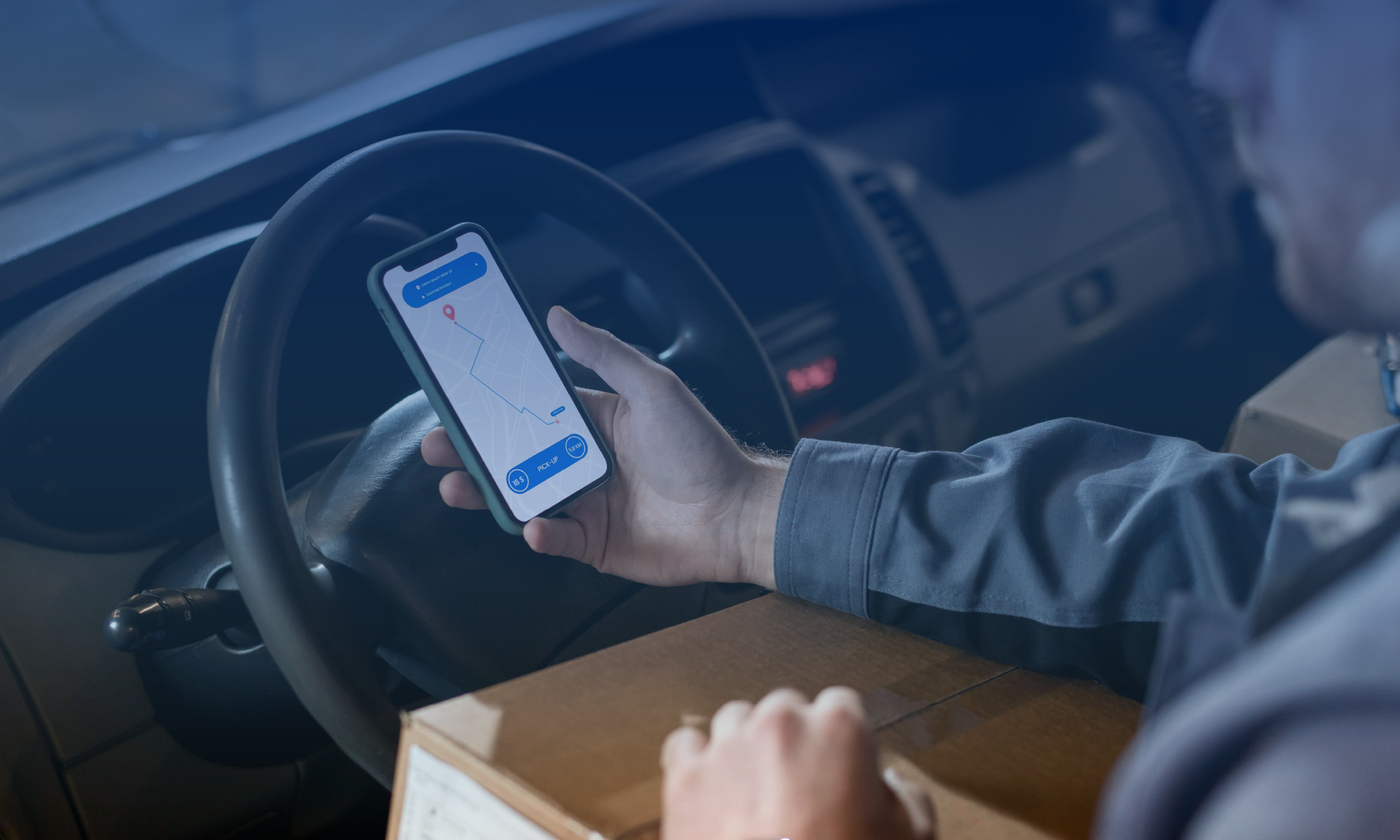


Moving people, pizzas, and packages efficiently isn’t just a convenience; it’s a competitive advantage for these companies.
In 2025, cities are facing tighter right‑of‑way constraints; freight networks are under pressure from e‑commerce demand, and customer expectations for speed and reliability keep rising. The common denominator is time and efficiency, and the differentiator is data. It’s what helps delivery, logistics, and mobility platforms make smarter and safer routes.
The Reality Check: Congestion and Curb Pressure in 2025
Congestion continues to climb across most urban areas. The INRIX 2025 Global Traffic Scorecard found that of 290 U.S. cities, 88% saw rising delays, with Chicago overtaking New York City as the most congested metropolis (112 hours lost per driver), while New York held flat, likely aided by congestion pricing policies.
At the curb, last‑mile delivery demand has outpaced loading zone supply. INRIX “Cracking the Curb” analysis showed San Diego leading with 12.8% of curb dedicated to loading, while Portland was at 0.5%. In Seattle, delivery drivers spend nearly six minutes on average searching for parking, increasing delivery times, fuel use, and safety risk. These findings underpin the need for INRIX to develop the INRIX Smart Delivery Suite, a set of data and software products that provide real‑time and historical traffic information, curb restrictions, and parking data, to provide better ETAs, safer routes, and more efficient routes.
Moving People: Safer, Faster, Smarter
INRIX partners with cities, DOTs, and transit providers to improve traffic flow and traveler safety. In Austin, the Mobility Management Center used INRIX Signal Analytics to shift from reactive to proactive operations; during SXSW, engineers evaluated signal performance and retimed eight locations, saving time and money for residents and visitors.
More broadly, agencies in 20 states monitor 10,000+ signalized intersections with INRIX Signal Analytics, achieving faster identification of split failures, control delay, and turn ratios without installing hardware. Cities can also access signal metrics programmatically via the Signal Analytics API, enabling before/after studies and integrated corridor management dashboards.
Moving Pizzas: Delivery Without Delays
Food delivery thrives on speed and accuracy. A leading pizza brand cut late deliveries by 18% using predictive rerouting. That outcome is consistent with wider market trends: in 2025, autonomous and semi‑autonomous last‑mile solutions are scaling to reduce search time at the curb and variability on arterial networks. INRIX Smart Delivery Suite enriches delivery platforms with real‑time traffic, incident detection, and parking probabilities—reducing detours, failed deliveries, and customer churn.
Moving Packages: Optimizing the Last Mile
For parcel and freight carriers, the last mile remains the costliest link. Using INRIX Speed Distribution Profiles and Volume Profiles, operators can select corridors and time windows that minimize delay, idling, and emissions, even when demand surges.
Curb data meets autonomy: The re‑launched INRIX Road Rules digitizes lane, curb, and sidewalk regulations so AV fleets, delivery operators, and ride‑hailing services can comply with local restrictions in machine‑readable form. What began as AV Road Rules in 2018 now helps cities manage the entire right‑of‑way in 2025 as AVs, micromobility, and outdoor dining compete for space.
2025: Autonomous Vehicles Meet Real‑Time Intelligence
Autonomous delivery isn’t sci‑fi; it’s here now. But it relies on data to make it function efficiently. Fleets must predict speeds and travel times, identify safe curb access, and reroute instantly when incidents occur. The INRIX AI Traffic product delivers instantaneous updates across all roads, blending 20+ years of data with modern ML to keep drivers and robots a step ahead.
The State of ACES (Autonomous, Connected, Electric, Shared) in mid‑2025 underscores the shift from pilots to paid services. Waymo scaled to 250,000 paid rides weekly across multiple U.S. metros, while other operators expanded geofenced robotaxi coverage, further highlighting the need for machine‑readable rules, signal performance data, and predictive routing.
Market Signals: What the 2025 Studies Say
Recent market research points to a clear inflection point in autonomous last-mile delivery, where scale, geography, and sustainability gains are converging to reshape urban logistics.
- The autonomous last‑mile delivery market is valued at $6.57B in 2025, projected to reach $44.56B by 2034 (CAGR ~23.7%), with ground vehicles accounting for ~84% of platform share and food & beverage leading end‑use.
- North America is a leading region for autonomous delivery, while China expects 200,000 autonomous delivery units operational by 2025, evidence that AV‑enabled logistics is diversifying across modalities and geographies.
- Pairing AI optimization with EV fleets in urban logistics can reduce delivery time 15–20% and emissions up to 40%, reinforcing sustainability outcomes alongside operational gains.
These directional trends align with what customers experience when they integrate traffic, curb, and parking intelligence into dispatch and routing; fewer failed deliveries, shorter dwell, and higher on‑time performance.
Putting It Together: People, Pizzas, Packages—One Data Fabric
Moving people (commuters and pedestrians), pizzas (food delivery ETAs), and packages (freight and parcel) all hinge on knowing what’s happening now and what will happen next.
- Moving people, requires real-time traffic information and incident data to ensure accurate ETAs and safe routes.
- Delivering pizzas, similarly requires, real-time traffic information, incident avoidance, and curb information, so that hot food arrives on time without risky double‑parking.
- Delivering packages requires Speed Distribution Profiles or Volume Profiles so carriers can build efficient and accurate manifests that reduce fuel consumption and idling while hitting tight service windows.
Ready to Move Smarter?
Whether you’re a city, retailer, fleet, or AV operator, the right data helps you blend real‑time, historical, and predictive mobility data into your workflows; so, people, pizzas, and packages arrive safely, on time, and with less environmental impact.
Learn more about INRIX products here: inrix.com/products/