



As the INRIX 2025 Global Traffic Scorecard highlighted, traffic safety in the United States improved dramatically in in the first half of 2025.
By June, traffic fatalities in the first half of the year dropped from 18,680 in H1 2024 to 17,150 in H1 2025, an 8% drop. Since traffic fatalities hit their recent peak in 2021, the National Highway Traffic Safety Administration (NHTSA) reported a 14% drop in road deaths in the first half of the year.
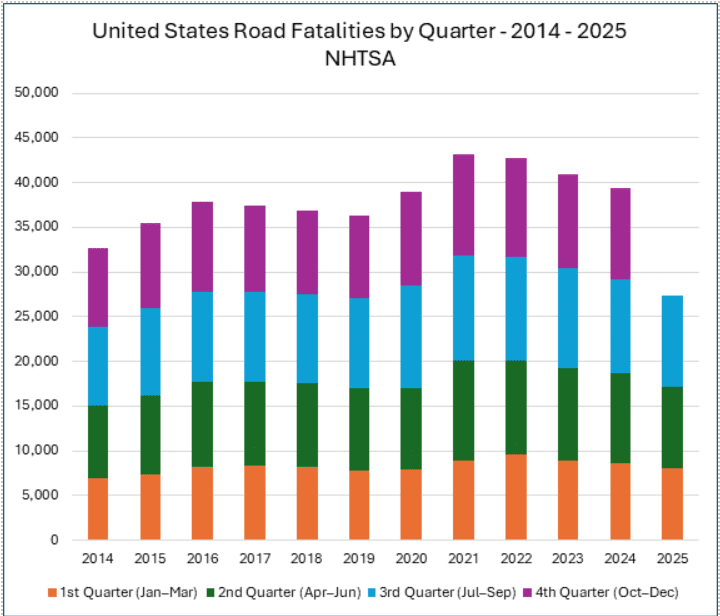
Yet the latest numbers released by NHTSA are cause for concern. Though Q3 traffic fatality rates remain 14% below their 2021 highs, high quarter-over-quarter growth could signal up ward movement.
For example, from 2014-2024, Q2 to Q3 growth rates averaged 9%, even with the rapid 24% spike in 2020. Yet in 2025, Q2 to Q3 fatalities grew at 13%. This suggests that traffic fatalities may be trending upward from earlier in the year, though they still may end lower for the year overall.
Though results are mixed, some recent data releases suggest that Q4 fatality numbers may still be above pre-COVID levels:
- Massachusetts reported a 6% drop in road fatalities for 2025;
- Florida news outlets said that traffic crashes fell 4%, but that fatalities remained “virtually unchanged;”
- New York City DOT showed a 19% decrease in road fatalities for 2025;
- San Francisco reported a 42% drop in traffic deaths year over year;
- Wisconsin reported a slight increase in the number of traffic fatalities in 2025.
So while there’s some positive news in the release, it’s also important to factor in the amount people drive, which NHTSA publishes as the fatality rate per 100 million vehicle-miles traveled (VMT).
Through the first nine months of the year the fatality rate stands at 1.1 per 100 million VMT, the lowest number in a decade. This in large part is due to the year setting record-breaking levels of car travel which have continued for the past two years.
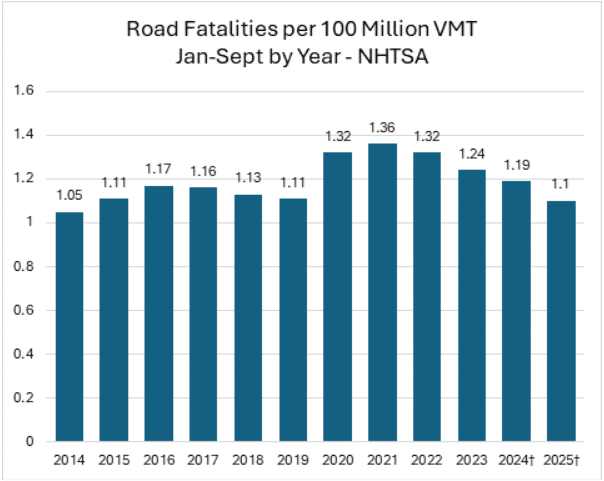
This means that on a per-mile basis, traffic fatalities are lower than at any time in the last decade, even though the number of fatalities remains higher than 2019 levels.
The mixed results from NHTSA highlight a positive step in the right direction, but also underscore ongoing concern for transportation officials and the general public. As more data is revealed, the causes of fatalities should get greater attention, especially in areas such as distracted driving, drunk driving, speeding, and the urban/rural split.
Learn more about the INRIX 2025 Global Traffic Scorecard.