


Two weeks into the Revive I-5 project, early traffic data shows a noticeable shift in travel conditions across the region’s major corridors.
Southbound commuters on both I-5 and I-405 are experiencing slower travel speeds and longer peak periods, while northbound evening travel has remained relatively stable. With the I-5 Express Lanes operating northbound all day, the impacts have been unevenly distributed, particularly during the morning commute. Whether you’re traveling I-5 or I-405 heading southbound into Seattle or Bellevue, the Revive I-5 project has left you sitting in traffic longer, while the I-5 Express Lanes remain fixed in the northbound direction.
Southbound I-5: Morning Commute Impacts
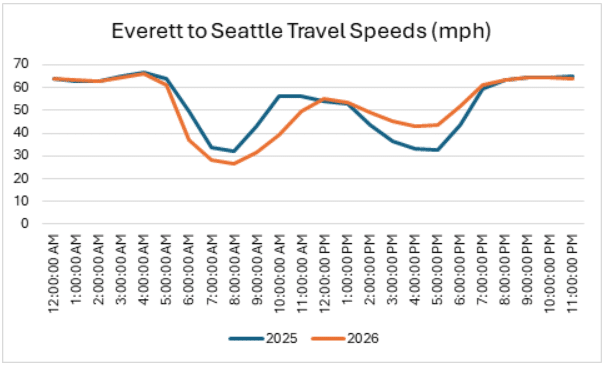
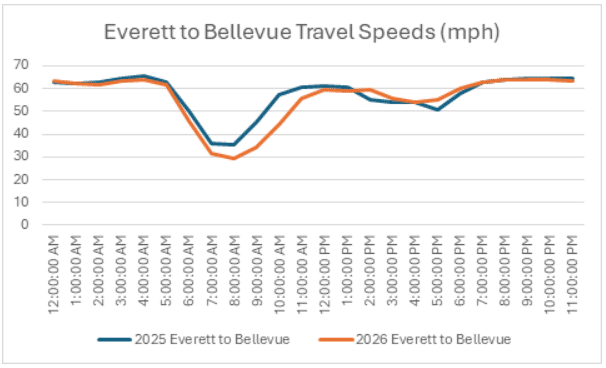
Heading into Seattle; travel speeds fall to 26.6 mph at 8:00 a.m., 18% slower than last year. More notable than the speed reduction is the expansion of the morning peak period, which begins an hour earlier and ends an hour later, from 6:00 a.m. to 10:00 a.m. At 6:00 a.m., travel speeds have slowed 26% to 37 mph while at 10:00 a.m., speeds dropped 31% compared to last year. This extended congestion window shows that travelers are encountering delays earlier in the morning and later into mid-morning hours.
Northbound I-5: Evening Conditions Remain Stable
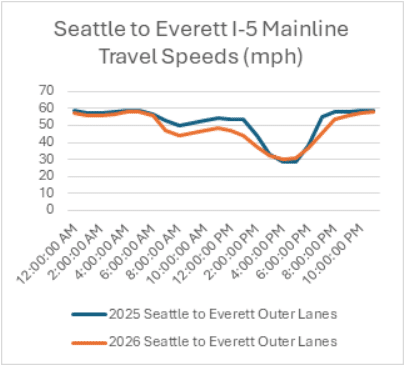
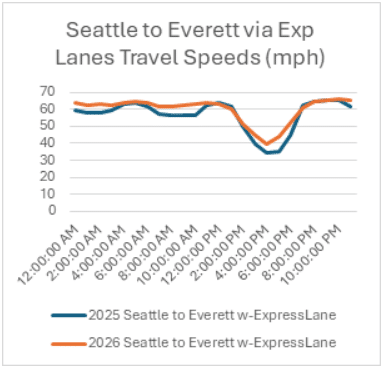
In contrast, northbound I-5 travel during the evening commute has remained close to 2025 levels. The primary reason is the I-5 Express Lanes remaining northbound throughout the day. During the peak afternoon commute period, the express lanes are moving 27% faster, while the I-5 mainline is moving 8% faster. This consistency highlights how directional lane management continues to benefit northbound travelers in the evening.
Southbound I-405: Spillover Effects in the Morning
I-405 has not been immune to the impacts of the Revive I-5 project. Morning congestion has increased, likely due in part to drivers diverting from I-5 in search of alternate routes. Similar to I-5, the peak period has been widened, stretching into the 10:00 a.m. hour. Travel speeds at 9:00 a.m. are 24% slower than last year, and travel speeds at 10:00 a.m. are 22% slower, likely due to drivers diverting onto I-405 to avoid I-5 delays.
Northbound I-405: Minimal Change in the Evening
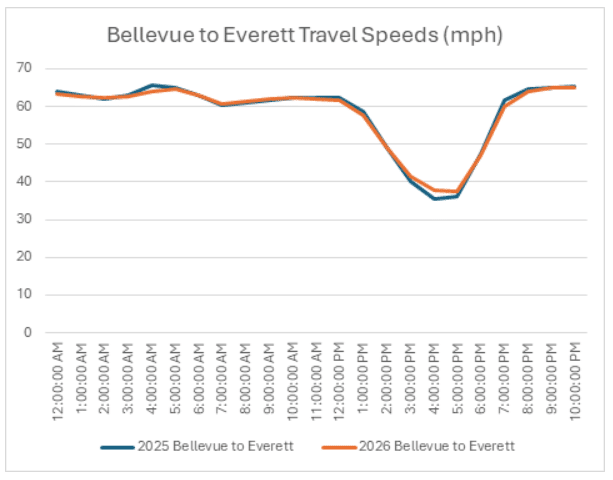
Northbound I-405 evening travel has remained largely consistent with 2025 conditions. While minor variations in speed exist, there has been no significant degradation in performance during the afternoon commute, mirroring the stability seen on northbound I-5.
Early Impacts and Ongoing Monitoring
Early data from the Revive I-5 project shows a clear divergence in travel conditions by direction and time of day. Southbound morning commuters on both I-5 and I-405 are facing slower speeds and substantially longer peak periods, while northbound evening travelers continue to benefit from stable conditions, particularly due to the all-day northbound express lane configuration.
As the project continues, these trends will be important to monitor. Extended peak periods not only increase travel times but also reduce flexibility for commuters who previously traveled just outside traditional rush hours. Continued analysis will help determine whether these impacts persist or evolve as drivers adjust their travel behavior.