
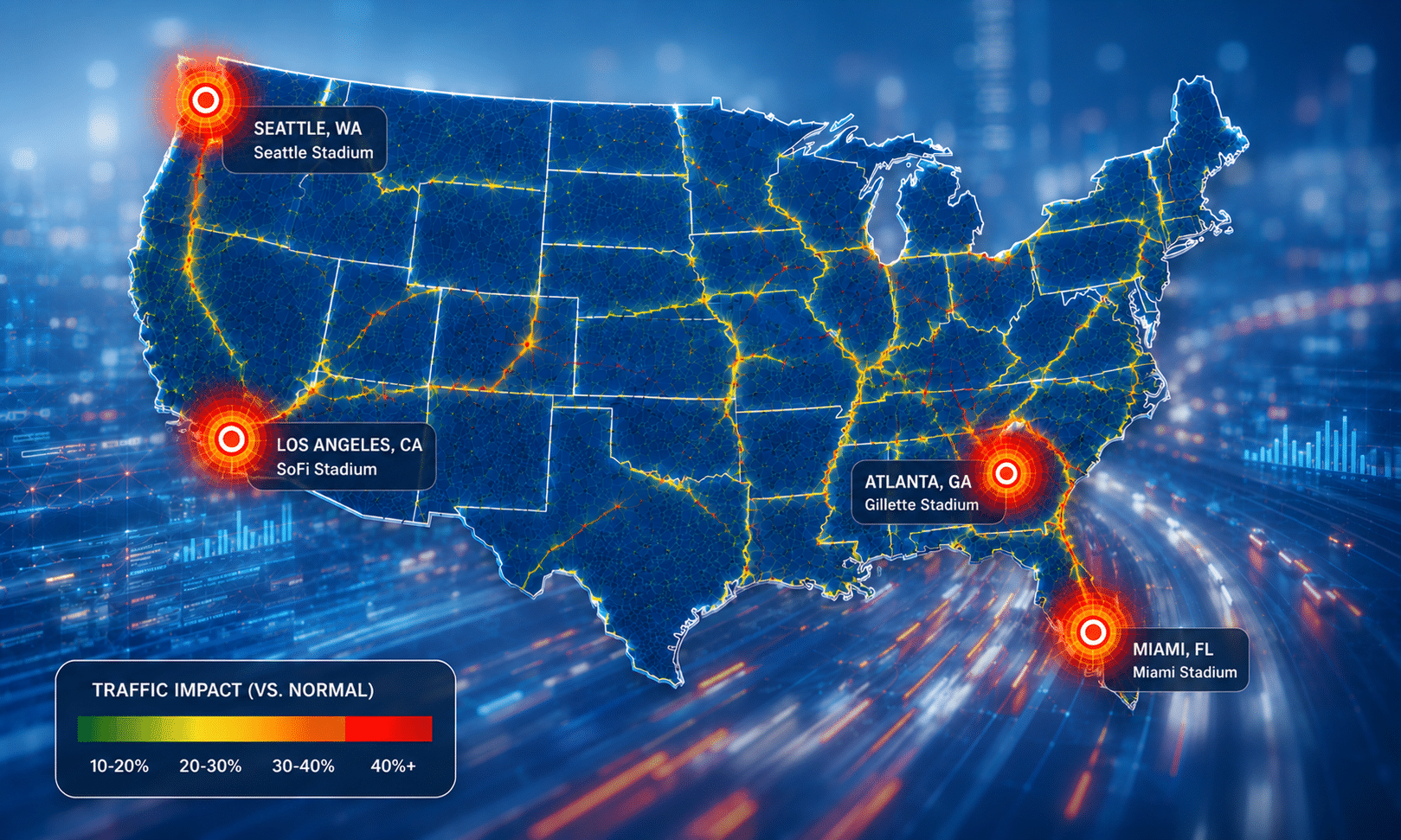


Following the opening matches of the 2026 FIFA World Cup, INRIX continued to monitor traffic conditions around host stadiums to understand how fans and everyday travelers shared the road network.
While some cities experienced significant congestion immediately before and after matches, others saw only minor impacts compared to a typical Monday. The June 15 matches in Atlanta, Seattle, Miami, and Los Angeles highlight how local travel patterns, stadium locations, and kickoff times influenced traffic conditions across host markets. For more on the tournament’s initial traffic impacts, read our earlier analysis of FIFA World Cup Opening Day traffic, World Cup-INRIX Traffic Report (June 12-June 14).
June 15, 2026 – Gillette Stadium – Atlanta, GA – 12:00pm Kickoff
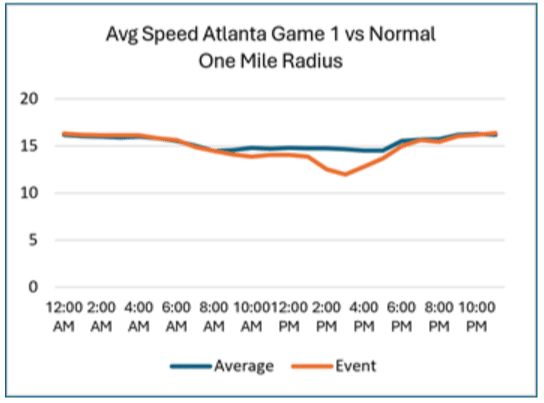
Within a one mile radius of the stadium, speeds fell the most post-game in the 3:00pm hour, with travel speeds just under 12mph, down 18% from its normal, 14.6mph average.
More than one mile out from the epicenter, speeds only fell slightly, at about four percent at the 3:00pm hour.
Key Corridors like I-85/I-75 S into the city saw only slight decreases in speed at certain parts of the day compared to a typical Monday, but traffic was generally quicker than a normal Monday.
June 15, 2026 – Seattle Stadium – Seattle, WA– 12:00pm Kickoff
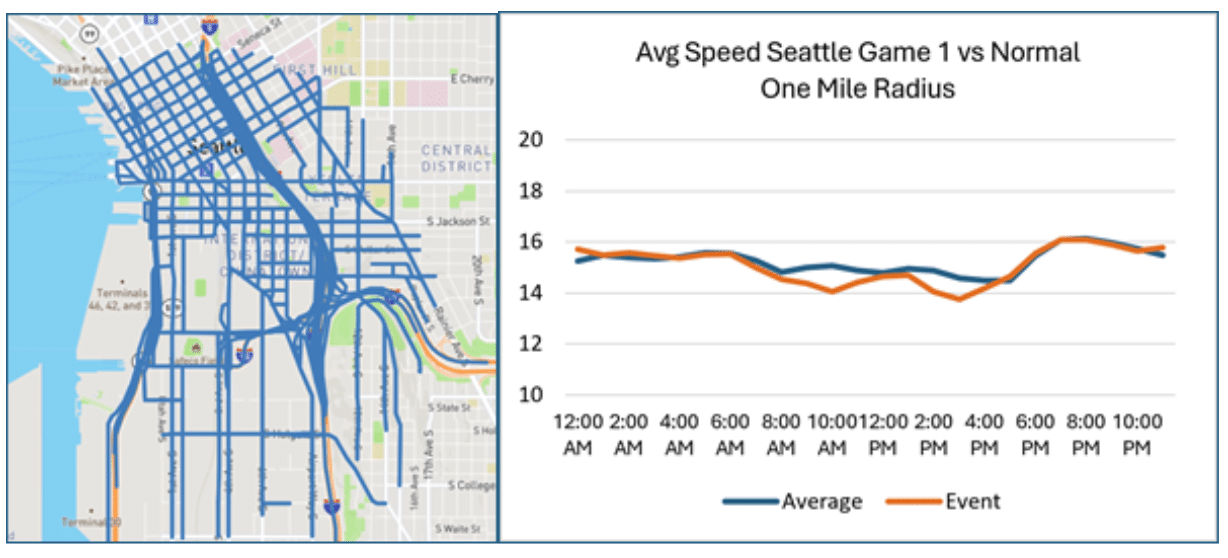
Traffic around the Seattle Stadium only varied slightly compared to the typical Monday. Speeds slowed 7% in the 10:00am before the noon kickoff, and slowed again by 6% versus the average Monday in the 2:00pm and 3:00pm hours following the event.
Even on key corridors, like I-5 Southbound from Lynnwood to Mercer Street, saw far less traffic congestion versus the typical Monday, with speeds reaching 38mph at the 7:00am hour versus the normal 26.5 mph during the same hour.
June 15, 2026 – Miami Stadium – Miami, FL – 6:00pm Kickoff
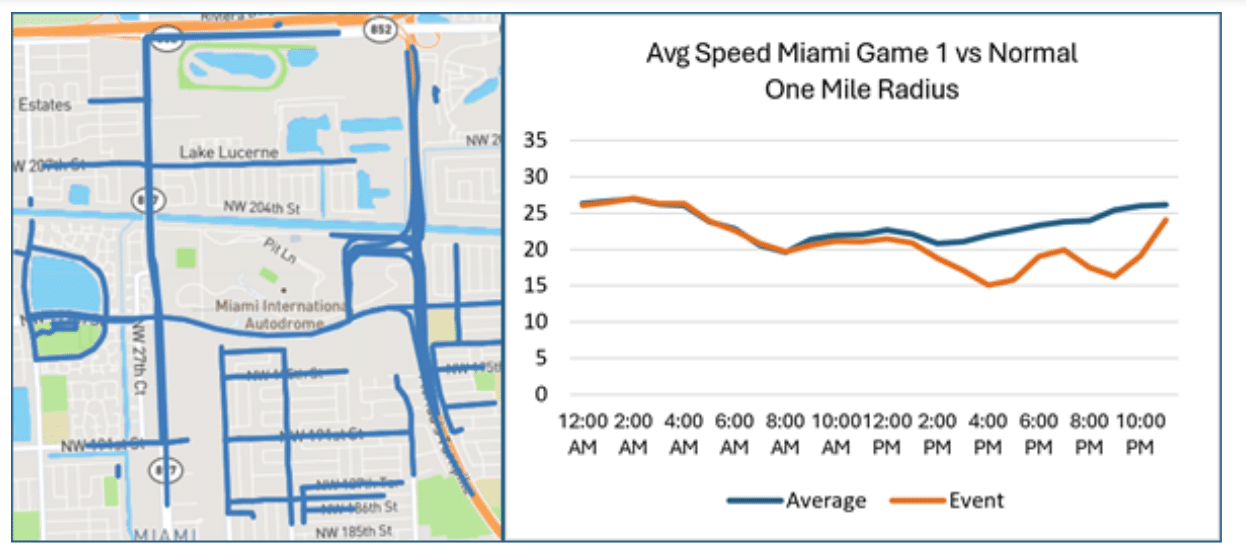
Within one mile of the stadium saw significant congestion prior to and after the World Cup game on June 15, 2026. Traffic speeds slowed 31% below normal to 15.1mph by 4:00pm, as commuters mixed with eventgoers before the 6:00pm kickoff. Post-game traffic was also significant after the game, with traffic slowing as much as 36% below normal to 16.3mph during the 9:00pm hour.
Within 1-3 miles from the stadium, traffic also slowed 8% to 18.9mph below normal at the 4:00pm hour.
GAME 2: June 15, 2026 – SoFi Stadium – Los Angeles, CA – 6:00pm Kickoff
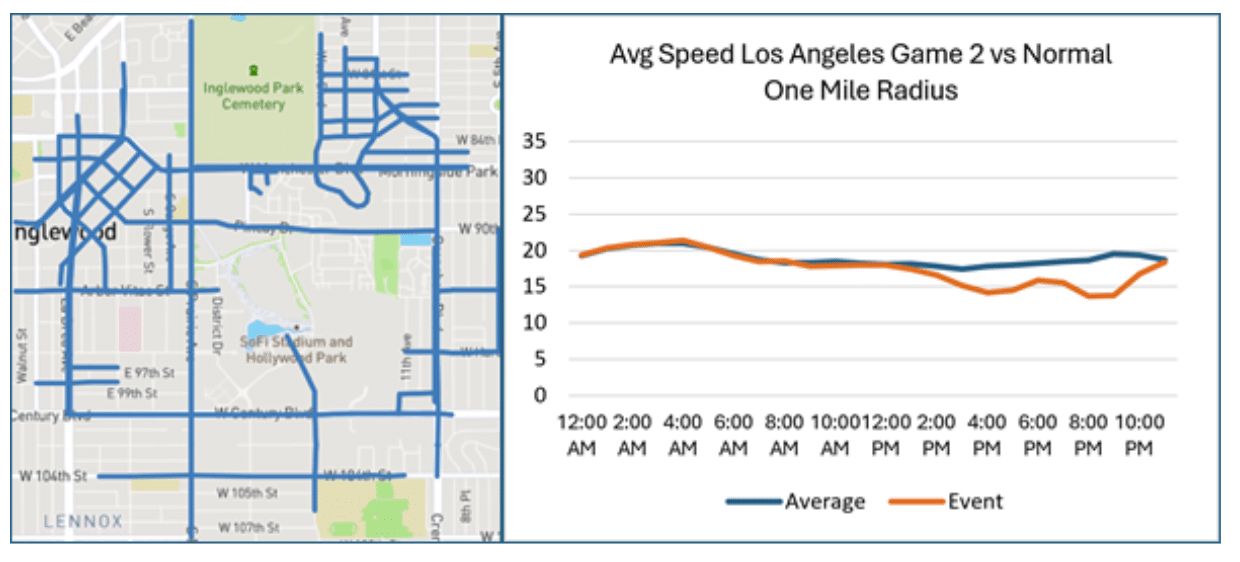
Los Angeles’ SoFi Stadium hosted its second game of the FIFA World Cup on Monday, June 15, 2026. With a 6:00pm kickoff, traffic within one-mile of the stadium began to build around 4:00pm, when traffic speeds fell 20% below normal to 14.2mph. Soon after the game, during the 8:00pm and 9:00pm hours, traffic speeds fell 29% below normal to 13.8mph.
Traffic speeds fell similarly to the first game, with post-game slowdowns exceeding pre-game slowdowns.
Traffic impacts from the June 15 matches varied widely across host cities, highlighting how kickoff times, venue locations, and local travel patterns can shape congestion during the World Cup. As the tournament continues, INRIX will keep tracking traffic trends and mobility impacts across host markets. Stay tuned for more insights throughout the 2026 FIFA World Cup.